Transcranial Magnetic Stimulation (TMS) is a non-invasive, FDA-approved treatment that uses gentle magnetic pulses to stimulate specific areas of the brain involved in mood regulation. TMS is commonly used to treat depression, obsessive-compulsive disorder (OCD), and other mental health conditions when symptoms have not improved with traditional treatments such as medication or therapy.
Unlike medication, TMS targets the brain directly and does not require anesthesia, sedation, or downtime. Patients remain awake and alert throughout treatment and can return to their normal daily activities immediately afterward.
Before Treatment
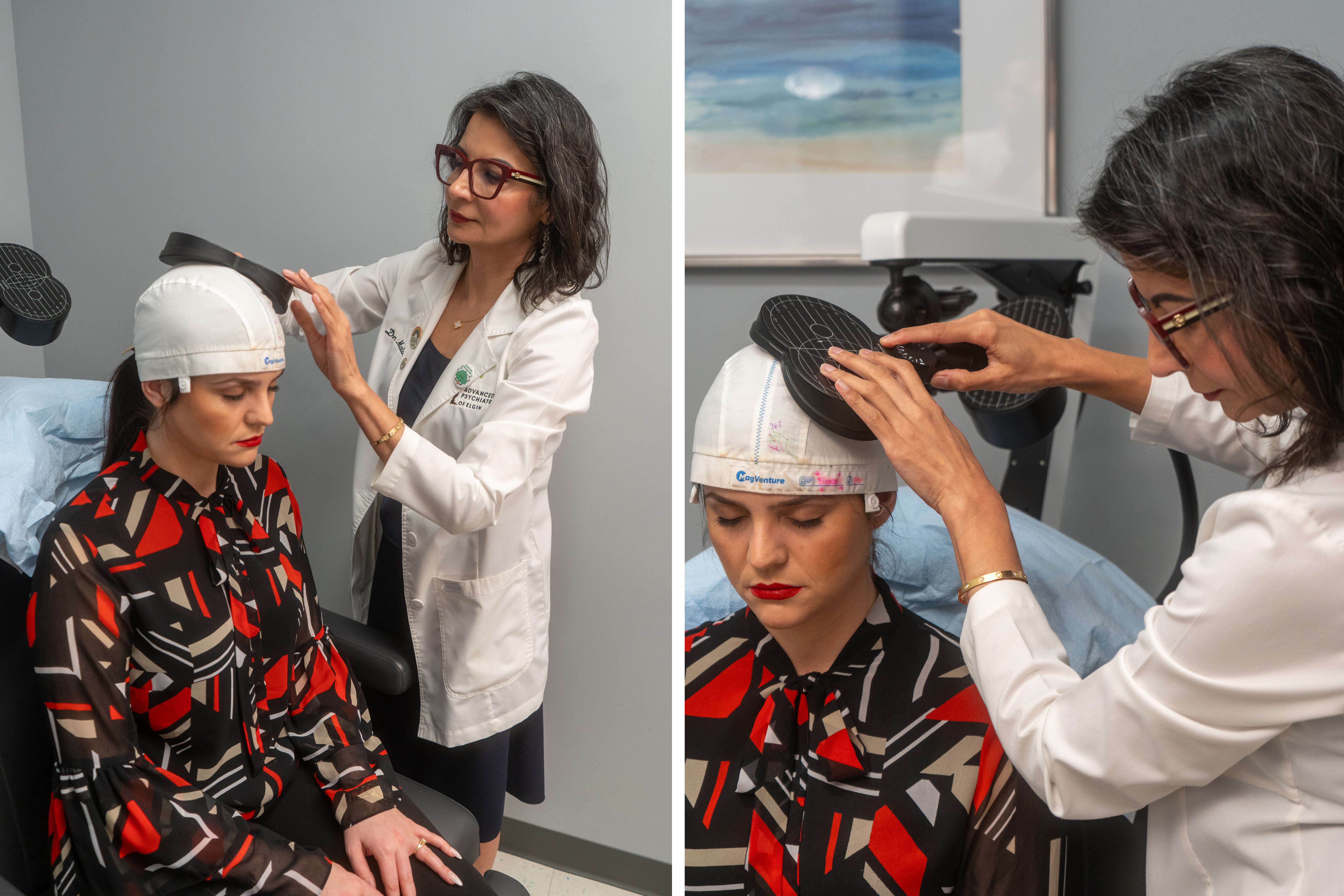
You will relax comfortably in a treatment chair while a small magnetic coil is positioned gently against your scalp.
During Treatment
The coil delivers targeted magnetic pulses to specific areas of the brain involved in mood regulation. Patients may feel a tapping sensation during treatment.
After Treatment
There is no recovery period. You may drive yourself home, return to work, or resume your normal daily activities immediately.
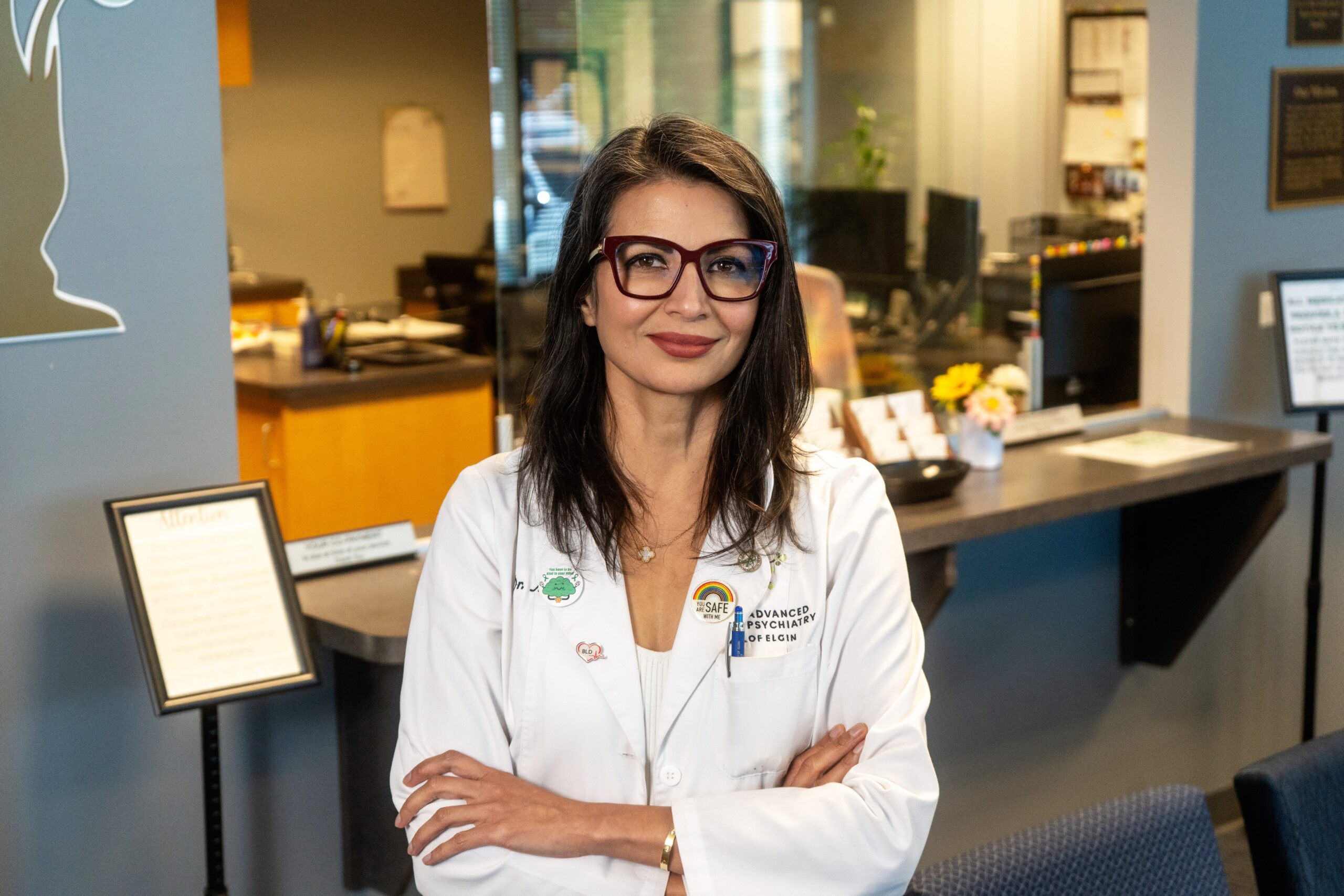
At Advanced Psychiatry of Elgin, Dr. Malik and our team provide individualized care throughout your treatment journey. Patients meet weekly with Dr. Malik to monitor progress, make adjustments when needed, and receive support through mindfulness techniques and coping strategies designed to enhance treatment outcomes.
1 session per day 5 days a week for 5-6 weeks total
10 sessions per day for 5 days
Patients typically spend approximately 11 hours in the clinic.